 Call
Call Whatsapp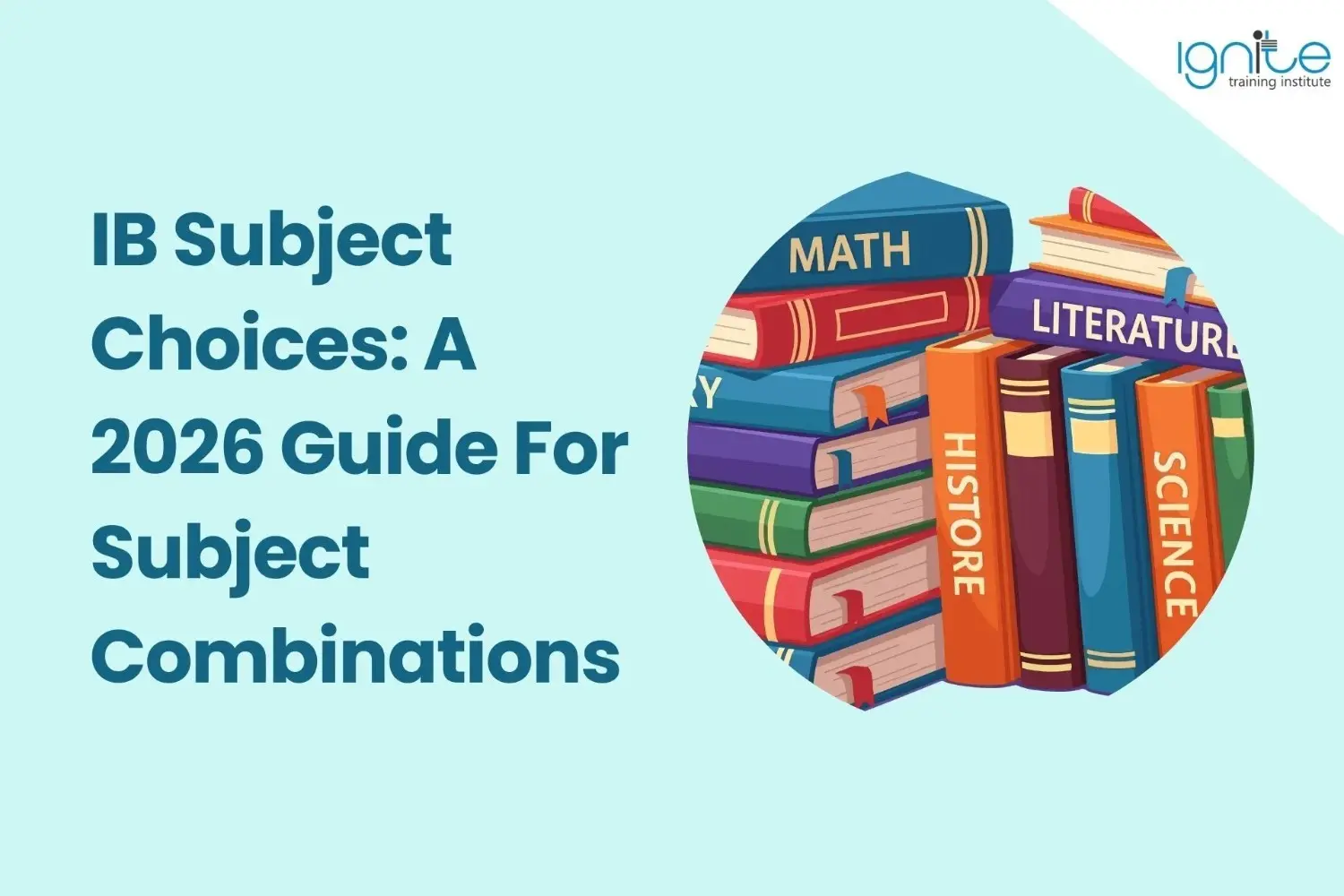
Key Summary
- Six Subject Groups Define The IB DP: The IB Diploma covers Language and Literature, Language Acquisition, Individuals and Societies, Sciences, Mathematics, and the Arts.
- Four IB Programmes Run In Sequence: PYP, MYP, DP, and CP cover students from age 3 to 19, with the Diploma being the most internationally recognised.
- HL & SL Shape University Pathways: Students take three Higher Level and three Standard Level subjects, with HL requiring 240 teaching hours against 150 for SL.
- Major Curriculum Updates In Motion: Subjects like Mathematics, Language B, Dance, and Religion are being refreshed for first teaching in 2026 and 2027.
- UAE Demand Is Growing Fast: The country now hosts 66 IB World Schools, with 59 of them offering the Diploma Programme.
Subject choice is one of the most consequential academic decisions a student makes in school. In the International Baccalaureate, those choices set the trajectory for university applications, career options, and the level of academic intensity over the next two years.
The UAE has become one of the most active IB regions in the world, with 66 IB World Schools across the country and a 2025 pass rate that beat the global average. Parents and students in Dubai face a real challenge: making sense of all six subject groups, the three core components, and the HL versus SL trade-off before locking in a combination.
This guide walks through every part of the IB curriculum subjects framework, with a clear focus on the Diploma Programme. If you are looking for one-to-one academic support, Ignite Training Institute offers IB tutors in Dubai across the full DP and MYP curriculum.
What Are The IB Curriculum Subjects?
Quick answer: The IB curriculum subjects refer to the academic disciplines taught across the four IB programmes. The IB Diploma Programme, taken by students aged 16 to 19, organises subjects into six groups: Language and Literature, Language Acquisition, Individuals and Societies, Sciences, Mathematics, and the Arts. Students study one subject from each group, three at Higher Level and three at Standard Level, alongside three core components called TOK, EE, and CAS. The full DP catalogue includes more than 50 subjects.
How The IB Structures Subjects Across Four Programmes?
The IB operates four distinct programmes, and each has its own approach to subjects. The Primary Years Programme uses transdisciplinary themes for ages 3 to 12. The Middle Years Programme covers eight subject groups for ages 11 to 16. The Diploma Programme is the academic flagship, with six subject groups for ages 16 to 19. The Career-related Programme blends DP subjects with vocational pathways for ages 16 to 19.
Globally, the IB now reaches more than 1.95 million students across 6,200 schools in over 160 countries. That global footprint is one of the reasons IB qualifications travel so well in university admissions.
How The IB Curriculum Works In The UAE?
Of the 66 IB World Schools in the UAE, 39 offer PYP, 31 offer MYP, 59 offer the DP, and 22 offer the CP. The breadth of programme availability is one reason families are choosing IB over other curricula. In 2025, GEMS Education alone had 645 students sit IB exams across seven schools, with an average score of 34 points against the global average of 30.
KHDA-rated schools across Dubai are also expanding their IB offerings each year, which has pushed up demand for structured DP and MYP support outside the classroom.
Know More About: IB Diploma Programme Explained: A Complete 2025 Guide
IB Diploma Subjects: The Six Subject Groups Explained
The IB diploma subjects are organised into six groups. Students must pick one subject from each group, although there is a small amount of flexibility (more on that in Group 6). The table below shows the full DP catalogue.
| Group | Subjects Offered | Levels Available |
| Group 1: Language & Literature | Language A: Literature; Language A: Language & Literature; Literature & Performance | HL & SL (Literature & Performance is SL only) |
| Group 2: Language Acquisition | Classical Languages; Language ab initio; Language B | HL & SL (ab initio is SL only) |
| Group 3: Individuals & Societies | Business Management; Digital Society; Economics; Geography; Global Politics; Philosophy; History; Psychology; Social & Cultural Anthropology; World Religions | HL & SL (World Religions is SL only) |
| Group 4: Sciences | Chemistry; Biology; Computer Science; Design Technology; Environmental Systems & Societies; Physics; Sports, Exercise & Health Science | HL & SL (ESS is SL only) |
| Group 5: Mathematics | Analysis & Approaches; Applications & Interpretation | HL & SL |
| Group 6: The Arts | Dance; Film; Music; Theatre; Visual Arts | HL & SL |
Group 1: Studies In Language & Literature
This group develops a student’s command of their strongest language through close reading and critical analysis. Language A: Literature is the most traditional path and looks closely at literary texts across genres. Language A: Language and Literature adds non-literary material like advertising, journalism, and political speeches into the mix. Literature and Performance is a smaller course that combines literary study with theatre performance.
Most UAE students take English in this group, but the IB recognises Language A: Literature in 55 languages, which is a meaningful advantage for Arabic, Hindi, French, or Mandarin speakers.
Group 2: Language Acquisition
This group is about learning a second language. There are three pathways. Language ab initio is for genuine beginners and is offered at SL only. Language B is for students with some prior experience and is offered at both HL and SL. Classical Languages covers Latin and Classical Greek and is rarely picked outside specific academic interest paths.
For UAE students, French, Spanish, Mandarin, and Arabic ab initio are the most commonly offered Group 2 subjects.
Group 3: Individuals & Societies
Group 3 is the humanities and social sciences block. The most popular choices in UAE schools tend to be Business Management, Economics, History, Psychology, and Geography. Global Politics and Digital Society are newer additions that suit students leaning towards international relations or technology-focused careers.
If you are aiming for a business or economics undergraduate degree, the IB Economics paper structure is worth understanding before committing to HL.
Group 4: Sciences
Group 4 covers Biology, Chemistry, Physics, Computer Science, Design Technology, Environmental Systems and Societies, and Sports Exercise and Health Science. Most pre-medicine students in the UAE pick Biology HL and Chemistry HL. Engineering aspirants typically pair Physics HL with Mathematics: Analysis and Approaches HL.
For a deeper look at one of the most demanding science courses, see our IB Physics SL and HL syllabus guide.
Group 5: Mathematics
Since 2019, the IB has run two Mathematics pathways. Analysis and Approaches is the more theoretical track, suited to students heading into pure mathematics, engineering, physics, or competitive economics programmes. Applications and Interpretation is the more applied track, suited to students going into business, design, social sciences, or natural sciences.
Both are available at HL and SL, and our complete guide on IB Maths AA and AI walks through which to pick based on your university plans.
Group 6: The Arts
Group 6 offers Dance, Film, Music, Theatre, and Visual Arts. The IB allows real flexibility here: students who want a more academic profile can swap their Group 6 subject for an additional subject from Group 2, 3, or 4. This is a common move among UAE students aiming for STEM or business pathways at competitive universities.
Know More About: IBDP Tutors In Dubai: Personalised Tutoring For All Diploma Subjects
Understanding Higher Level & Standard Level In IB DP Subjects
Every IB DP subject runs at one of two depths: Higher Level (HL) or Standard Level (SL). The split matters because it shapes both your workload and your university eligibility.
How HL & SL Differ In Teaching Hours & Depth?
HL subjects require 240 teaching hours; SL subjects require 150. That is roughly 60 percent more classroom time per HL subject. HL also goes deeper into syllabus content, demands stronger exam technique, and carries more weighted internal assessments.
Choosing Your HL & SL Mix
Students take three subjects at HL and three at SL. HL subjects should be the ones tied to your intended university degree. SL is for broadening your profile and meeting the IB’s spread requirement. We cover specific HL and SL combinations by career path further down in this guide.
Know More About: IB Computer Science: 2027 Syllabus, HL & SL & Grades
The Three Core Components Of The IB Diploma Programme
Beyond the six subjects, every DP student completes three core components. The core can add up to three bonus points to the total IB score of 45 and is a non-negotiable part of qualifying for the Diploma.
Theory Of Knowledge (TOK)
TOK asks how we know what we claim to know. Students sit through 100 hours of class, deliver an oral exhibition, and write a 1,600-word essay. It is a philosophy-style course that draws on every other subject they study.
Extended Essay (EE)
The EE is an independent 4,000-word research paper on a topic of the student’s choice. From May 2027, students will be able to choose between a Subject-Focused EE (one subject) and an Interdisciplinary EE (two subjects with a guiding framework), per the IB’s updated DP and CP guidance.
Creativity, Activity, Service (CAS)
CAS asks students to balance academics with creative pursuits, physical activity, and service to the community. It is not graded, but failing to complete CAS means you do not earn the diploma.
Know More About: How To Study For IB Exams: 10 Preparation Tips That Work
IB Program Subjects In The Other Three Programmes
Although the IB program subjects in the DP get most of the attention, the other three IB programmes also have structured subject frameworks worth understanding, especially if you are looking at the IB continuum from primary school onwards.
Primary Years Programme (Ages 3-12)
The PYP is built around six transdisciplinary themes rather than rigid subjects. Children explore Language, Mathematics, Science, Social Studies, Arts, and Personal Social and Physical Education through inquiry units. There are no final exams. Students culminate the programme with the PYP Exhibition in their final year.
Middle Years Programme (Ages 11-16)
The MYP introduces eight subject groups: Language and Literature, Language Acquisition, Individuals and Societies, Sciences, Mathematics, Arts, Design, and Physical and Health Education. Students complete a Personal Project in their final year.
Some UAE schools offer the optional MYP eAssessment in Year 5, which gives students an externally validated certificate. If your child is in MYP and needs structured support, our IB MYP tutors in the UAE run one-to-one sessions tailored to MYP coursework.
Career-related Programme (Ages 16-19)
The CP combines DP subjects with a career-related study (such as business, engineering, or hospitality), a Reflective Project, Personal and Professional Skills coursework, Service Learning, and language development. The CP is a strong option for students who want academic depth alongside a clear career direction. Around 22 UAE schools currently offer it.
Know More About: IB MYP Programme Guide: All You Need To Know
How To Choose The Right IB DP Subjects?
Picking IB DP subjects is part academic, part strategic. Three factors should guide the decision: your university goals, your workload tolerance, and your genuine interest in the material.
1. Match Subjects To Your Target University & Career
Start with the end in mind. UK Russell Group universities, US Ivy League schools, and UAE universities all publish subject requirements for specific degrees. Medicine almost always needs HL Chemistry and HL Biology. Engineering needs HL Maths AA and HL Physics. Law tends to favour HL English and HL History. Build your HL choices around the prerequisites for your shortlisted courses.
2. Balance Difficulty With Workload
It is tempting to load up on three challenging HL subjects, but the IB Diploma is already one of the most demanding pre-university qualifications globally. Picking three HL subjects you can sustain across two years is more useful than picking three you struggle with from the start. Look at past papers, talk to current Year 12 students, and be honest about how much extra time outside class you can commit.
3. Plan For UAE & International University Requirements
One parent shared that her daughter, who studied at Ignite for around three years across IGCSE and IB, picked HL Maths AA, HL Biology, and HL Spanish on the back of careful subject planning. With consistent tutor support, she secured offers from UCL and the University of Edinburgh. Stories like hers reinforce a simple point: subject choice is not just about scoring well, it is about scoring well in the subjects that get you into your target university.
If you are still mapping out which programme suits your child best, our IBDP tutors in Dubai can walk through subject combinations one-on-one.
Know More About: Top Universities That Accept IB: Scores & Requirements 2026
Best IB DP Subject Combinations By University Path
Once you understand how HL and SL work, the next question is what specific combination of subjects to actually pick. The right IB subject combination is not the toughest one on paper, it is the one that aligns with the entry requirements of your target degree, plays to your strengths, and keeps your overall workload sustainable across two years.
The table below maps the most common university and career paths to the IB DP subject combinations that UAE students typically pick. Use it as a starting point, then validate against the published entry requirements for the universities on your shortlist.
| University Or Career Path | Three HL Subjects | Three SL Subjects |
| Medicine | Biology, Chemistry, English A (or Maths AA) | Maths AI (or AA), Language B, Psychology or Economics |
| Engineering | Maths AA, Physics, Chemistry | English A, Economics, Language B |
| Computer Science | Maths AA, Computer Science, Physics | English A, Economics, Language B |
| Business Or Economics | Economics, Maths AA, English A | Business Management, Geography or Physics, Language B |
| Law | English A, History, Economics or Global Politics | Maths AI, Language B, Psychology |
| Architecture | Maths AA, Physics, Visual Arts | English A, Language B, Geography or Design Technology |
| Psychology | Psychology, Biology, English A | Maths AI, Language B, Economics or Sociology |
| Humanities Or Liberal Arts | English A, History, Language B (or Economics) | Maths AI, Biology or Geography, Visual Arts or Theatre |
| Undecided Or Generalist | English A, Maths AA, A Science (Biology or Chemistry) | Economics, Language B, Geography or Psychology |
Common Mistakes To Avoid When Picking IB Subject Combinations
Three patterns come up repeatedly in conversations with parents during subject selection week.
- Picking Three HL Subjects From The Same Group: Universities want subject breadth. Three HL sciences with no HL humanities or language often look narrow on a university application.
- Dropping HL Maths AA When You Need It: Engineering, Computer Science, Physics, and competitive Economics programmes at universities like Imperial, UCL, and LSE require HL Maths AA. Swapping into Maths AI to save effort can close those doors entirely.
- Ignoring SL Subjects: SL subjects still count toward your final 45-point total. Picking SL subjects you actively dislike will pull down your score.
UAE-Specific Considerations When Choosing Subject Combinations
UAE students sit between three university markets: the UK, the US, and the UAE itself. Each treats IB subject combinations slightly differently. UK universities are the most prescriptive about HL subject requirements. US universities are the most flexible but still expect strong HL grades in subjects aligned to your intended major. UAE universities like NYU Abu Dhabi, the American University of Sharjah, and Khalifa University publish their own minimum HL and overall point requirements.
If your child is in Year 11 and just starting subject selection conversations, our IBDP tutors in Dubai run one-to-one sessions to map subject combinations against shortlisted university courses, so the final choice is made on evidence rather than gut feel.
Know More About: IB Certificate VS Diploma: Key Differences 2026
Recent IB Curriculum Updates You Should Know About
The IB runs its curriculum on a rolling refresh cycle, and several updates are already in motion for 2025 to 2027. If you are picking subjects now, knowing what is changing matters.
- First Teaching 2025: Computer Science, Design Technology, Psychology, and Visual Arts have been refreshed with first assessments in May 2027.
- First Teaching 2026: History has been updated, with a stronger focus on critical thinking over content memorisation.
- First Teaching 2027: Dance, Language ab initio, Language B, Mathematics: Analysis and Approaches, and Mathematics: Applications and Interpretation are all undergoing review. A new subject called Religion and Society replaces World Religions.
- Restructured Extended Essay: From May 2027, students choose between a Subject-Focused EE and an Interdisciplinary EE.
- Online Exams Pilot: Select schools will sit live online IB exams from May 2026 as part of a wider shift towards digital assessment by the early 2030s.
For a more detailed look at recent science syllabus changes, see our breakdown of the IBDP syllabus changes for 2025 across Physics, Chemistry, and Biology. You can also track the latest revisions directly on the IB’s curriculum updates page.
Know More About: IBDP Syllabus Changes For 2025: Physics, Chemistry, & Biology
Ignite – Best IB Tutors In Dubai For DP Subject Mastery
Choosing IB curriculum subjects is one challenge. Performing well across all six over two years is another. Ignite Training Institute supports IB students through every part of that journey, from Year 11 subject selection conversations with parents to past-paper-driven exam preparation in Year 13.
Our IB programme covers DP and MYP, with subject specialists in Mathematics, Sciences, Economics, Business Management, English, Computer Science, and more. Every student gets a tutor matched to their specific HL and SL combination, structured weekly sessions, and a clear track of past paper practice. We work with students across KHDA-rated international schools in Dubai and the wider UAE.
Whether your child is preparing for an IBDP Internal Assessment, sitting their TOK essay, or trying to lift a HL subject from a 5 to a 7, our IB tutors in Dubai provide the structured support that makes the difference.
Know More About: IB Tutors In Dubai For Exam Success: IB Coaching In UAE
FAQs
1. How Many Subjects Do You Study In The IB Diploma Programme?
Students study six subjects in the IB Diploma Programme, with one from each of the six subject groups. Three subjects are taken at Higher Level and three at Standard Level. On top of that, students complete the three core components: Theory of Knowledge, Extended Essay, and Creativity, Activity, Service.
2. What Are The Six IB DP Subject Groups?
The six IB DP subject groups are Studies in Language and Literature (Group 1), Language Acquisition (Group 2), Individuals and Societies (Group 3), Sciences (Group 4), Mathematics (Group 5), and the Arts (Group 6). Students must pick at least one subject from Groups 1 to 5, while Group 6 can be replaced with a second subject from Group 2, 3, or 4.
3. Can You Choose Two Sciences Instead Of An Arts Subject?
Yes. The IB allows you to swap your Group 6 (Arts) subject for an additional subject from Group 2, 3, or 4. Many UAE students pursuing medicine or engineering choose this option to take a second science alongside Biology, Chemistry, or Physics. The total subject count stays at six.
4. What Is The Difference Between IB HL And SL Subjects?
Higher Level subjects require 240 teaching hours and cover content in greater depth, while Standard Level subjects require 150 hours and offer a broader but less intensive treatment of the same disciplines. Both are graded on the same 1 to 7 scale. HL subjects are usually the ones aligned with a student’s intended university degree.
5. Are IB Curriculum Subjects Recognised By UAE Universities?
Yes. The IB Diploma is recognised by leading UAE universities including NYU Abu Dhabi, the American University of Sharjah, the American University in Dubai, and Khalifa University, alongside international universities globally. Specific course entry requirements vary, so check the prospectus for each programme you are targeting.
6. Which IB Diploma Subjects Are Considered The Hardest?
Students and teachers commonly cite Mathematics: Analysis and Approaches HL, Physics HL, Chemistry HL, History HL, and English Literature HL as among the most demanding. Difficulty varies with the student’s strengths, the school’s teaching approach, and the level of independent study. Subject difficulty should be weighed against personal interest and university plans rather than reputation alone.
Know More About: IB Maths Complete Guide: Choose Between IB Maths AA & AI
Conclusion

Choosing the right IB curriculum subjects is one of the most defining academic decisions a student makes in school. The six subject groups, the HL and SL split, and the three core components are all designed to push students into a broad and rigorous learning experience, but the freedom to shape that experience sits with each individual student.
Take time over the decision. Talk to teachers, look closely at past papers, and align your HL subjects with the universities and careers you are aiming for. If you would like structured one-to-one guidance through subject selection or exam preparation, book a free demo class with an Ignite IB tutor or get in touch with our academic team.
Know More About: IB Certificate VS Diploma: Key Differences 2026
June 11


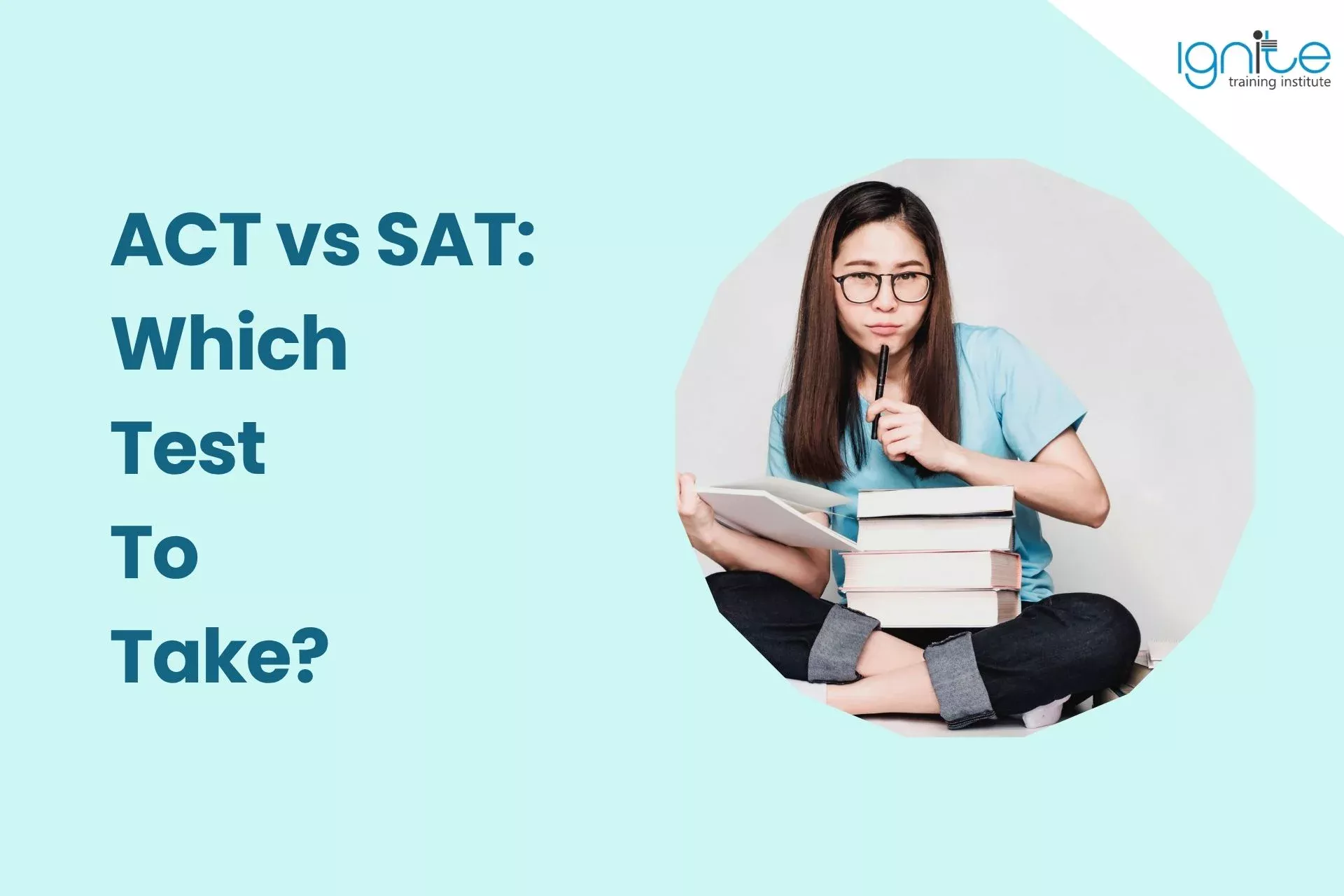
ACT Vs SAT: Which Test To Take In 2026?
November 20
Which AP Math Courses Should You Take? A Student’s Guide
October 25