 Call
Call Whatsapp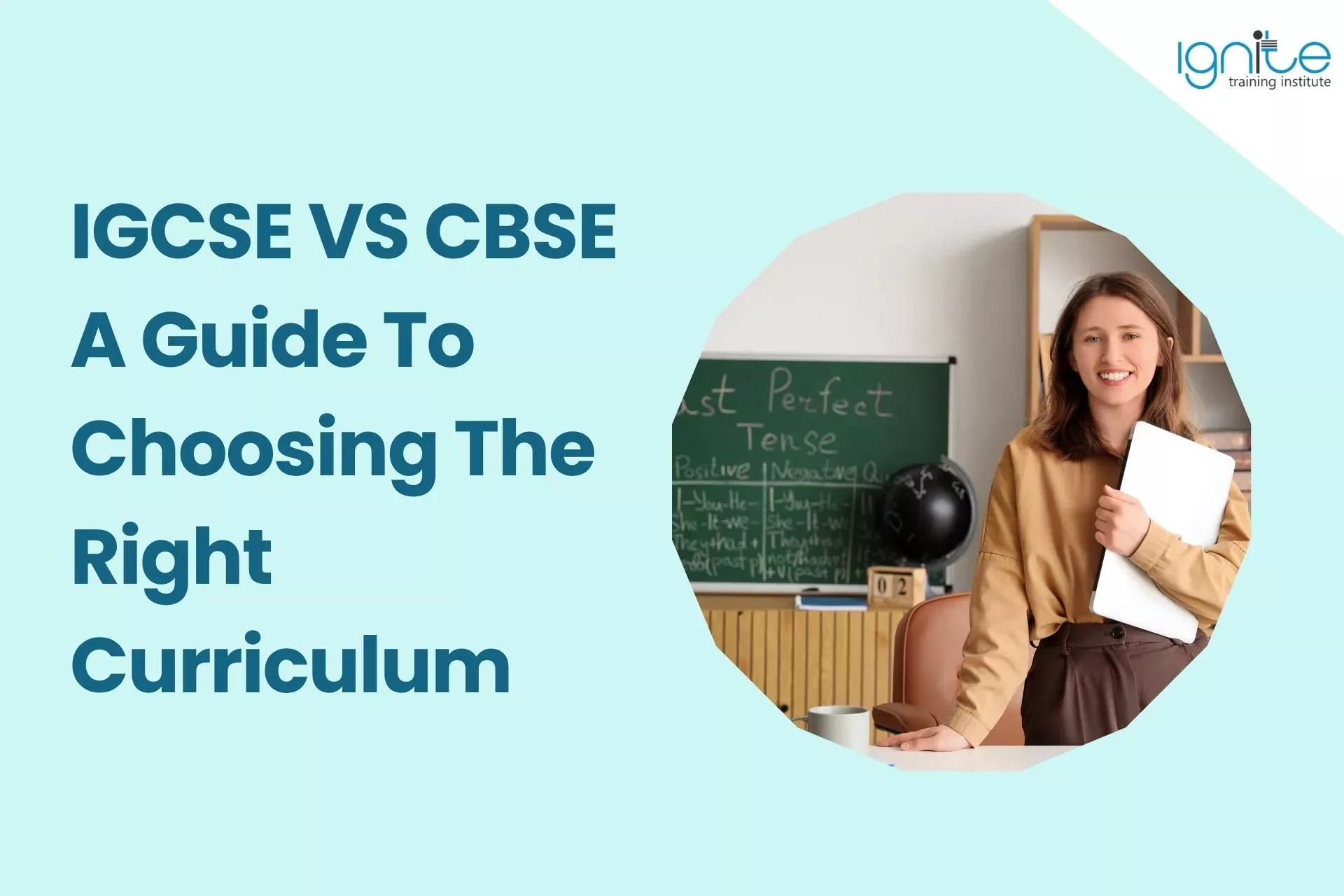
Key Summary
- Two Strong, Different Paths: IGCSE and CBSE are both academically solid, but they differ significantly in flexibility, assessment style, and suitability for different academic goals.
- Global VS National Focus: IGCSE is internationally recognized and application-based, while CBSE provides structured, exam-oriented preparation aligned with Indian competitive entrance exams like JEE and NEET.
- Difficulty Depends On Learning Style: IGCSE is generally considered more challenging due to its analytical assessment approach, but CBSE demands strong memorization and disciplined time management.
- UAE Families Have A Unique Advantage: With both CBSE and IGCSE schools available across Dubai and the UAE, families can choose based on their child’s strengths, career goals, and long-term plans.
- 2026 Could Shift The Landscape: CBSE’s planned Global Curriculum rollout in April 2026 for UAE schools may narrow the gap between the two systems for expatriate families.
If you are a parent in Dubai or the UAE, you have access to some of the best CBSE and IGCSE schools in the region. That is a genuine advantage, but it also makes the decision harder. Choosing between IGCSE and CBSE is one of the most common questions families face when enrolling their child in a new school or considering a curriculum switch.
This guide breaks down the key differences between IGCSE and CBSE in a clear, practical way. At Ignite Training Institute, we support students across both curricula with personalized IGCSE tutoring in Dubai, helping them build confidence and achieve strong exam results.
What Is The Difference Between IGCSE And CBSE?
IGCSE (International General Certificate of Secondary Education) is a globally recognized qualification developed by Cambridge Assessment International Education, designed for students aged 14 to 16. CBSE (Central Board of Secondary Education) is India’s national education board, offering a structured and standardized curriculum from Grades 1 to 12. The core difference is that IGCSE follows a flexible, application-based approach with international recognition in over 150 countries, while CBSE provides a theory-driven, exam-oriented structure that is closely aligned with Indian university entrance exams such as JEE and NEET. Neither board is inherently better; the right choice depends on the student’s academic goals, learning preferences, and future university plans.
IGCSE At A Glance
The IGCSE is administered by Cambridge Assessment International Education (CAIE) and is taught in over 150 countries worldwide. It offers more than 70 subject options, allowing students to build a subject combination that reflects their strengths and interests, without being locked into a rigid stream like Science, Commerce, or Arts.
The curriculum emphasizes practical application, independent research, and critical thinking. Assessment includes a mix of written examinations, coursework, and practical components depending on the subject. Grading follows an A* to G scale, offering a detailed view of student performance across levels. For a deeper look at how the qualification works, you can read our comprehensive IGCSE guide.
CBSE At A Glance
CBSE is one of India’s most widely recognized education boards, affiliated with thousands of schools across India and over 240 schools internationally, including more than 100 schools in the UAE alone. The curriculum is developed in alignment with the National Council of Educational Research and Training (NCERT) framework and follows a structured progression from primary through to senior secondary levels.
CBSE’s academic focus lies in building a strong theoretical foundation, particularly in Mathematics and Science. The board conducts centralized examinations at the Class 10 and Class 12 levels, and its syllabus is closely aligned with national competitive exams like JEE (engineering), NEET (medical), and CUET (university admissions). Instruction is available in both English and Hindi, which is particularly useful for families who want bilingual education.
Know More About: Cambridge IGCSE: Comprehensive Guide For Parents & Students
IGCSE VS CBSE: Key Differences That Actually Matter
When parents compare IGCSE and CBSE, the differences go beyond surface-level features. Here is a breakdown of the areas that have the most practical impact on a student’s day-to-day learning experience and future academic path.

Curriculum Structure And Subject Flexibility
IGCSE offers over 70 subjects with no fixed stream restrictions. A student interested in both Physics and Art can choose both without being forced into a single academic pathway. This flexibility encourages students to explore their interests while still maintaining a strong academic core.
CBSE, on the other hand, organizes subjects into defined streams at the senior secondary level: Science, Commerce, and Arts. While this structure provides clear direction, it limits cross-disciplinary choices. English is compulsory across all streams, and subjects like Environmental Studies and Social Science are part of the core curriculum at the secondary level.
Assessment And Examination Style
This is where the IGCSE syllabus vs CBSE difference becomes most visible in day-to-day learning. IGCSE assessments are application-based, often requiring students to analyze case studies, interpret data, and construct arguments. Questions tend to be open-ended, testing how well a student can apply what they have learned rather than how much they can recall.
CBSE assessments follow a more structured pattern. Board exams include a mix of objective and subjective questions, with a heavier emphasis on recalling content from the prescribed textbook. The examination format is predictable and standardized, which can be an advantage for students who perform well in structured test environments. CBSE also uses a combination of formative (internal) and summative (board) assessments, including practicals and projects.
Grading Systems
IGCSE uses an 8-point grading scale from A* (highest) to G. This allows for finer distinctions between performance levels. CBSE follows a 9-point grading system (A1 to E), though at the board exam level, percentage marks are also commonly reported. Both systems offer a transparent view of academic achievement; however, IGCSE grades enjoy broader recognition among international universities.
Language Of Instruction
IGCSE is delivered primarily in English, with some subjects available in other languages depending on the exam board and school. CBSE offers instruction in both English and Hindi, making it a strong option for families who value bilingual education or plan to return to India for higher studies.
Know More About: Indian Curriculum VS British Curriculum: What To Consider?
IGCSE Syllabus VS CBSE: How The Content Actually Compares
Depth VS Breadth In Core Subjects
The IGCSE curriculum tends to cover fewer topics within each subject but goes deeper into each one. Students are expected to understand concepts well enough to apply them in unfamiliar situations. For example, in IGCSE Science, a student might be asked to design an experiment or evaluate data from a study they have not seen before.
CBSE covers a broader range of topics within its syllabus, particularly in Mathematics and Science. The depth of coverage is strong, but the emphasis leans more toward mastering the prescribed content and solving problems within known frameworks. This breadth is intentional, as it prepares students for the wide-ranging syllabi of Indian competitive exams.
For students who prefer exploring subjects in depth and developing independent analytical skills, the IGCSE curriculum often feels more engaging. For those who need a comprehensive foundation across all areas of a subject, CBSE’s structured approach serves that purpose well.
Teaching Methodology And Classroom Approach
IGCSE classrooms typically encourage inquiry-based learning. Students are expected to ask questions, form hypotheses, and work through problems independently before arriving at answers. Coursework and research projects are a regular part of assessment in many IGCSE subjects, which builds skills that translate well to university-level study.
CBSE classrooms follow a more teacher-led approach, with a stronger emphasis on lectures, textbook exercises, and practice papers. The system is evolving, and recent reforms under the National Education Policy (NEP) 2020 are moving toward more experiential learning. However, the primary assessment focus remains on board examinations, which naturally shape how subjects are taught in the classroom.
It is also worth noting that some families consider ICSE (Indian Certificate of Secondary Education) as a middle ground, since it offers a more detailed English language curriculum than CBSE while maintaining an India-focused structure. However, for families weighing an internationally recognized qualification against a national board, the IGCSE vs CBSE comparison remains the most relevant. For a broader look at how IGCSE compares with IB, see our IB vs IGCSE comparison.
Know More About: IGCSE Subjects Choices: Navigate Your Options For The Future
Is IGCSE Harder Than CBSE?
This is one of the most frequently asked questions among parents and students comparing the two boards. The honest answer is that it depends on the student. Each system is demanding in different ways, and what feels challenging varies based on individual learning strengths.
Where IGCSE Feels More Challenging
IGCSE exams tend to be more analytically demanding. Questions often require students to apply concepts to new scenarios rather than reproduce memorized content. Open-ended questions are common, especially in subjects like English, History, and the Sciences. Students need to construct arguments, evaluate evidence, and demonstrate independent thinking.
The coursework component in many IGCSE subjects also adds a layer of complexity. Research projects, laboratory reports, and extended writing assignments require sustained effort and self-management, which can be challenging for students who are used to a more guided learning environment.
Where CBSE Demands More
CBSE’s challenge lies in the volume of content and the high-stakes nature of board examinations. The syllabus is extensive, and students need to retain a large amount of factual information across multiple subjects. The pressure of annual board exams, combined with the need to prepare for competitive entrance exams like JEE and NEET simultaneously, creates a demanding workload that should not be underestimated.
Time management becomes critical in the CBSE system, particularly in Classes 11 and 12, where students often balance school examinations with coaching for entrance tests. The structured, predictable exam format can be an advantage, but it also means that a single exam session carries significant weight.
A Subject-By-Subject Perspective
In Mathematics, CBSE covers a broader range of topics, while IGCSE focuses on deeper problem-solving and application. Students who are strong in conceptual thinking often find IGCSE Maths more engaging, while those who prefer structured practice across many topic areas may feel more comfortable with CBSE.
In the Sciences (Physics, Chemistry, Biology), IGCSE places more emphasis on experimental design, data interpretation, and practical application. CBSE provides thorough theoretical coverage that serves as strong preparation for Indian medical and engineering entrance exams.
In English, IGCSE is widely considered more challenging due to its focus on critical analysis of literature and extended writing. CBSE English is comprehensive but follows a more straightforward comprehension and grammar-based approach.
Know More About: 10 Proven Strategies On How To Study For IGCSE Exams & Excel
How To Decide: IGCSE Or CBSE For Your Child
Rather than asking which board is better, the more useful question is: which board fits your child’s situation? Here is a practical framework based on common family scenarios.
If Your Child Plans To Study At International Universities
IGCSE is the stronger choice here. Universities in the UK, US, Canada, Australia, and Europe are highly familiar with IGCSE and A-Level qualifications. The skills developed through IGCSE assessment, such as analytical writing, independent research, and critical evaluation, align closely with what international universities expect from incoming students.
One of our students at Ignite studied across IGCSE and IB over three years, building a strong academic profile through structured tutoring and consistent past paper practice. With focused preparation, she secured university offers from UCL and the University of Edinburgh, demonstrating how the IGCSE pathway can lead directly to top global institutions. For students weighing the post-IGCSE path, our A-Levels vs CBSE comparison provides additional clarity on the next steps.
If Your Child Is Preparing For Indian Entrance Exams (JEE, NEET)
CBSE is the more aligned option. The CBSE syllabus shares significant overlap with the syllabi for JEE (Joint Entrance Examination for engineering) and NEET (National Eligibility cum Entrance Test for medicine). Students preparing for these exams will find that their school curriculum directly supports their entrance exam preparation, reducing the need for separate coaching on basic concepts.
IGCSE students can still prepare for Indian entrance exams, but they often need additional support to bridge syllabus gaps, particularly in Physics and Mathematics, where CBSE covers certain topics in greater depth. This is one of the areas where targeted tutoring can make a significant difference.
If You Are An Expat Family In Dubai Or The UAE
Families in the UAE have the unique advantage of choosing from a wide range of CBSE and IGCSE schools, all regulated by education authorities like the Knowledge and Human Development Authority (KHDA) in Dubai, ADEK in Abu Dhabi, and SPEA in Sharjah. This makes the decision less about availability and more about fit.
For Indian expat families who may relocate back to India, CBSE offers a smoother transition, since the curriculum is consistent across CBSE schools worldwide. For families planning to remain internationally mobile or targeting universities outside India, IGCSE provides stronger global recognition and a more seamless transition into A-Levels, IB Diploma, or other international post-16 qualifications.
Fee structures also differ. CBSE schools in the UAE generally have lower tuition fees compared to British curriculum (IGCSE) schools. This is a practical consideration, particularly for families making long-term schooling decisions. To explore IGCSE school options in the region, refer to our guide on the top IGCSE schools in Dubai.
Know More About: A-Levels VS CBSE: Comparing World’s Top Education Systems
CBSE’s Global Curriculum 2026: What UAE Parents Should Know
A significant development that could reshape this comparison is CBSE’s planned Global Curriculum, announced for rollout in April 2026. Starting with all 106 CBSE-affiliated schools in the UAE and expanding to other Gulf nations, this new curriculum aims to integrate international learning standards with India’s educational framework.
According to reporting from Gulf News and Business Standard, the Global Curriculum will move toward competency-based, inquiry-driven learning and will include localized elements such as Arabic language and Moral Studies to meet UAE regulatory requirements. The initiative was formally announced at the 31st Sahodaya School Complexes conference in Dubai, with input from KHDA, ADEK, and SPEA.
If implemented as planned, this could narrow the gap between CBSE and IGCSE on several fronts, particularly in areas like assessment flexibility and international recognition. However, details are still being finalized, and parents should watch for official updates from their child’s school as the April 2026 launch date approaches. For now, the comparison in this guide reflects the current state of both curricula.
Know More About: CBSE Or IB Board: Comparative Analysis & Popular Facts
Ignite Training Institute: IGCSE Tutors In Dubai Supporting Your Academic Journey
At Ignite Training Institute, we work with students across both IGCSE and CBSE, providing personalized academic support tailored to the specific demands of each curriculum. Whether a student needs help mastering IGCSE application-based questions or building a strong foundation for CBSE board exams, our experienced tutors design structured learning plans that target real academic challenges.
Our IGCSE tutoring program includes focused past paper practice, subject-specific exam strategies, and regular progress tracking. For students considering a transition between curricula, we provide guided support to bridge any knowledge gaps and help them adjust to new assessment expectations. With a team of subject-specialist tutors covering Mathematics, Physics, Chemistry, English, and more, Ignite is built to help students not just prepare for exams, but to genuinely understand their subjects and perform with confidence.
Know More About: Best Indian Schools In Dubai 2026: Fees & Ratings
FAQs
1. Is IGCSE Accepted In Indian Universities?
Yes. Most Indian universities accept IGCSE qualifications, particularly when followed by A-Levels. However, for competitive entrance exams like JEE and NEET, IGCSE students may need to cover additional topics that are part of the CBSE syllabus but not covered in the IGCSE framework. Universities such as Delhi University, Christ University, and many private institutions accept IGCSE transcripts as part of their admissions process.
2. Can A Student Switch From CBSE To IGCSE Mid-Way?
Yes, switching is possible, and it is more common than many parents expect. The transition is generally smoother when done before or at the start of the IGCSE years (typically Year 10, equivalent to Grade 9 in CBSE). Students switching mid-way may need support in adjusting to the different assessment style, particularly the emphasis on analytical writing and application-based questions. In the UAE, the Transfer Certificate from the previous school is submitted to KHDA for approval.
3. Which Curriculum Is More Affordable in the UAE?
CBSE schools in the UAE are generally more affordable, with annual fees ranging from approximately AED 4,000 to AED 30,000 depending on the school and emirate. British curriculum (IGCSE) schools tend to have higher fee structures, often starting above AED 20,000 and going considerably higher for premium schools. However, affordability should be weighed alongside factors like curriculum fit, school quality, and long-term educational goals.
4. Is IGCSE Better Than CBSE For University Admissions?
It depends on the destination. For universities in the UK, US, Canada, and Australia, IGCSE followed by A-Levels or IB is the more recognized pathway. For Indian universities and competitive exams (JEE, NEET, CUET), CBSE provides a more direct and aligned preparation. Both pathways can lead to strong university outcomes when the student is well prepared and supported.
5. What Are The Disadvantages Of IGCSE In India?
The IGCSE curriculum has limited alignment with Indian competitive exams like JEE and NEET, which means students often need additional coaching to cover syllabus gaps in Physics and Mathematics. It is also significantly more expensive than CBSE or ICSE, and fewer schools in India offer it compared to national boards, which can make transitions or school changes more challenging.
Conclusion

The IGCSE vs CBSE decision is not about which board is universally better. It is about which system aligns with your child’s strengths, learning style, and future academic plans.
IGCSE offers flexibility, global recognition, and an analytical learning approach that prepares students well for international universities. CBSE provides a structured, comprehensive curriculum that builds a strong foundation for Indian higher education and competitive entrance exams.
For families in the UAE, this decision comes with the added advantage of having high-quality options in both systems. Take the time to assess where your child thrives, consider the long-term academic path, and choose accordingly.
Whichever curriculum you select, strong academic support and consistent preparation will always be the most important factors in your child’s success. If you would like guidance on choosing the right curriculum or academic support for your child, book a free demo class with Ignite or speak with our academic advisors to discuss your child’s specific needs.
Know More About: 10 Key Benefits Of Private Tuition For Students In Dubai

Categories:
August 5


Cambridge IGCSE Physics 0625: Syllabus & Past Papers
August 5
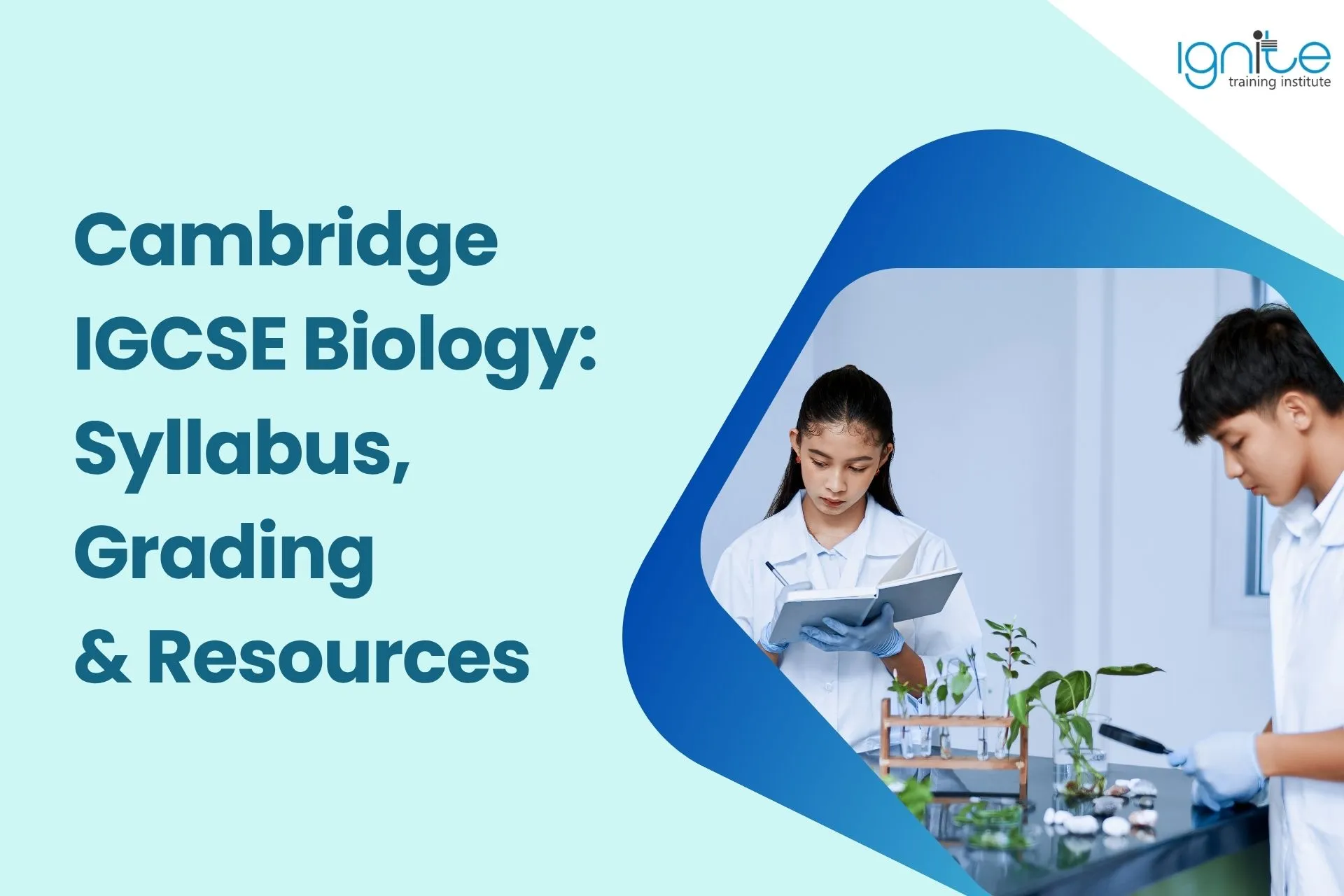
Cambridge IGCSE Biology: Syllabus, Grading & Resources
August 5